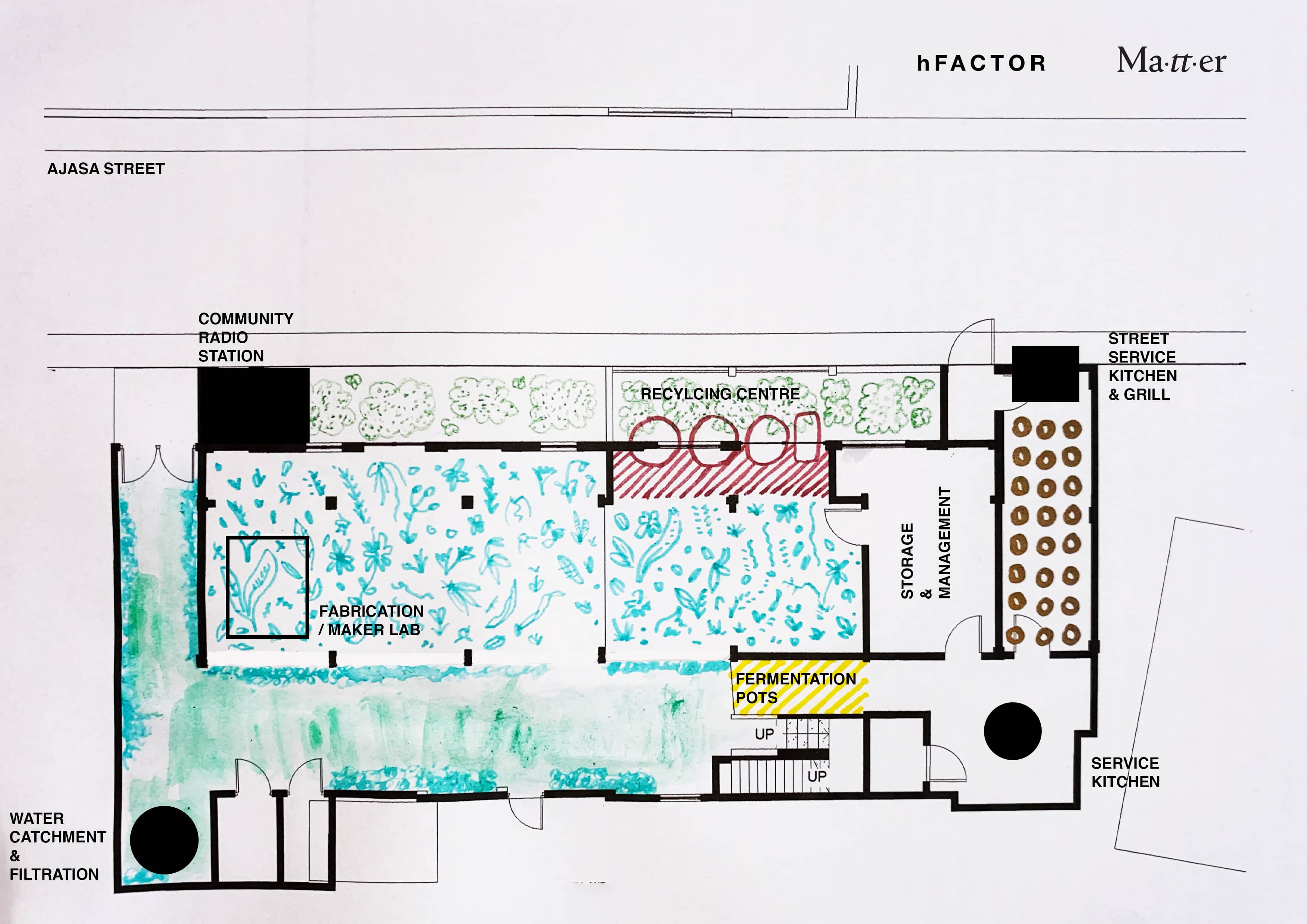
The building at 30 Ajasa Street sits in Onikan, Lagos Island—a narrow structure typical of the area's mixed architectural heritage of Brazilian Baroque and British Colonial influences. In 2019, it was transformed into a regenerative cultural space through a collaboration between hFACTOR Collective and Ma-tt-er, merging cultural infrastructure with functional urban agriculture systems under one roof. The space was designed to be multi-functional: creative residencies upstairs, workshop and making spaces downstairs, and agricultural systems woven throughout.
The building houses artist residency rooms, workshop areas for lo-tech making (fermentation, radio production, printing, up-cycling), a carpentry workshop, clay station, and communal kitchen spaces. Physical infrastructures were built through creative residencies and workshops, with plants and plant life central to the design—creating a living archive of local plant knowledge alongside a digital sound bank that serves as the building's institutional memory. The space operates as both a creative incubator and a teaching tool for sustainable living practices around food, shelter, and materials.
The building represents a shift from cultural spaces that are simply consumed to ones that actively grow in relationship with their environment. It addresses urban regeneration as both cultural and ecological necessity, offering a model for integrating creative education with self-sustaining systems that teach ecological literacy and provide alternative modes of wellbeing and climate adaptation. The structure itself is an ongoing experiment in how craft-based materials can create shelter, separation, and connection.